moon blood ~ the dynamic biology of your menstrual flow
our menstrual blood, just like our cycle, is a monthly messenger that reflects our general wellness and vitality and yet we so often dismiss or under-appreciate this complex process of cyclical renewal. have you ever stopped to consider the intelligence and intricacy that is held within your moon blood?
“menstrual blood is a symbol of the life-death-rebirth cycle, in which dissolution and decay are inevitably followed by renewal and regeneration. every month when a woman bleeds, she is given the opportunity to shed her inner skin and in the process renew and revive her spirit” ~ Jason Elias
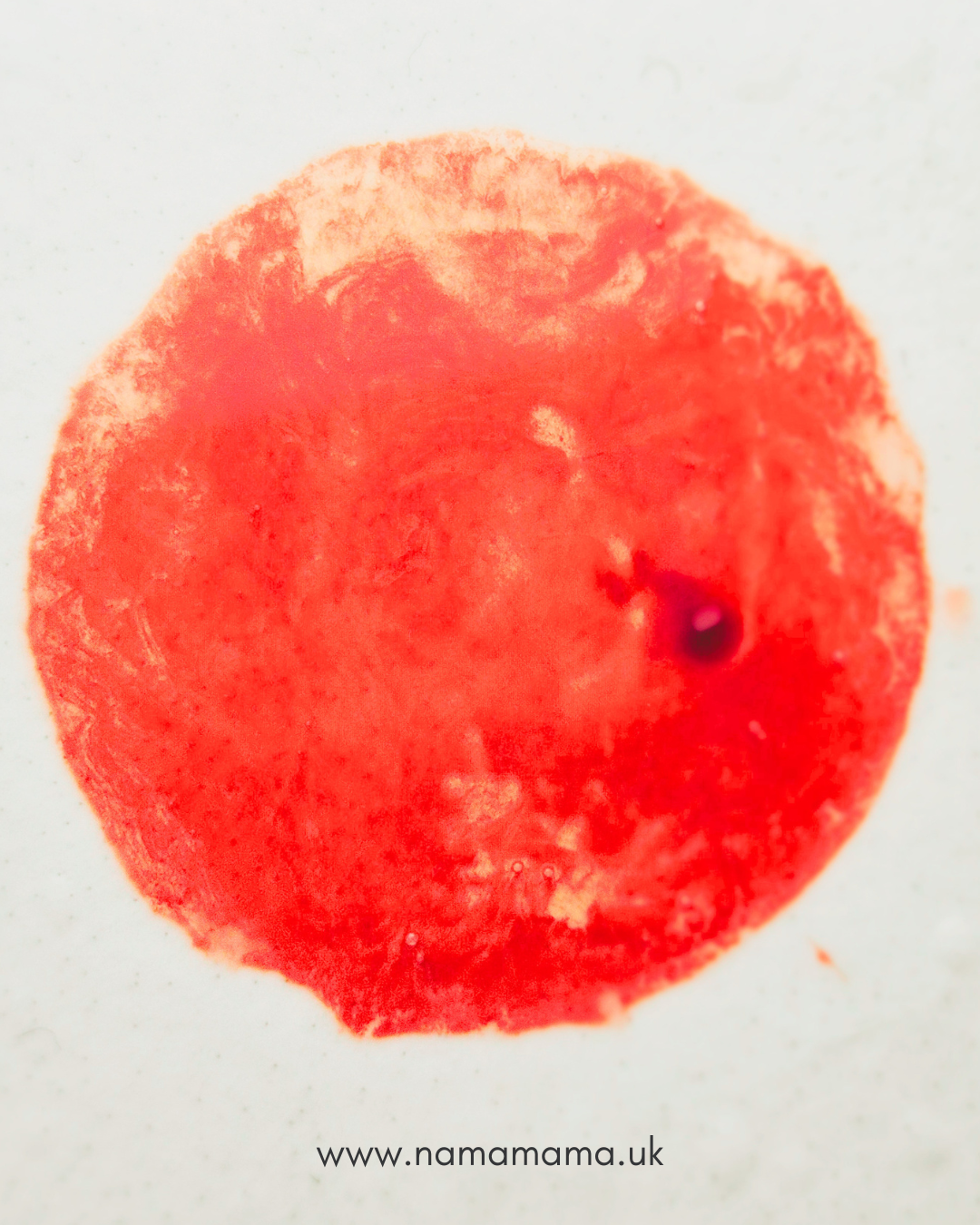
a drop of my menstrual blood on my bathroom floor that took me by surprise as i gently started my bleed unexpectedly
more than just blood
menstrual blood is the shedding of the endometrium, the inner lining of the womb that has been building throughout the cycle to prepare for a potential pregnancy.
if pregnancy does not happen, then hormonal changes will signal the body to release this lining, and it leaves the body as menstrual fluid.
this fluid is not regular, circulatory blood, like that from an injury or wound, it is a unique biological substance that has many different components.
moon blood is not the blood of being wounded, it is the blood of renewal.
moon blood reflects the body's amazing ability to prepare, release and regenerate with each cycle, carrying within it cellular and biological traces of this continual process of transformation.
what is menstrual blood actually made of?
our menstrual fluid is a rich and dynamic composition of blood, uterine tissue, cervical mucus, immune cells, beneficial microbes and even stem cells. it holds countless biological signals that reflect the cyclical nature of our bodies. when we begin to understand what our menstrual blood is made of, we can start to view our cycles with greater curiosity and appreciation.
blood including the red & white blood cells and plasma, that help carry oxygen, nutrients and immune factors throughout the body.
endometrial tissue the soft, nutrient rich lining of the uterus. the endometrium is an active tissue that’s capable of supporting the earliest stages of pregnancy. it contains proteins, glycogen (a stored form of energy), lipids (fats) and immune cells. we may think of menstrual blood as being old or “dead”, but even at the time it is shed, it still contains many biomolecules that form the foundation of all living organisms, and vital for the function and regulation of our body’s processes, it’s a living fluid!
cervical mucus and vaginal secretions that change in texture and composition in response to hormonal fluctuations during the menstrual cycle. these secretions are also present as we bleed and add to the consistency and appearance of menstrual blood.
immune cells that help support tissue repair, regulate inflammation and assist in the breakdown and renewal of the uterine lining.
menstrual stem cells the lining of the uterus is one of the few tissues in the body that is able to grow, shed and rebuild itself month after month without forming scar tissue. this is due to the presence of stem cells within the endometrium. menstrual stem cells can help us deepen our understanding of tissue healing, inflammation and reproductive health. while research is still evolving, it highlights and affirms that moon blood is not simply the end of the cycle, but a reminder of our capacity for renewal.
the menstrual phase is an active and intelligent process involving communication between hormones, immune responses and tissue regeneration.
the living landscape of our moon blood
when we think about the microbiome, we often think of the gut, yet the inner landscape of our reproductive system is also home to a range of micro communities of beneficial bacteria that quietly support our health and cyclical balance. as our menstrual blood passes through the womb, cervix and vagina, it carries with it microorganisms, traces of this unique ecosystem.
for many years we associated bacteria with illness or infection, but we now know that a healthy body depends upon thriving communities of beneficial microbes. the vagina is naturally home to a rich and carefully balanced microbiome, with lactobacillus playing a particularly important role in producing lactic acid, which helps maintain the vagina's naturally acidic pH (around 3.8–4.5). this acidic environment is protective and makes it harder for potentially harmful bacteria and yeasts to thrive.
researchers are now exploring how these microbes change throughout the menstrual cycle and what role they may play in menstrual health, fertility, pregnancy and overall wellbeing.
the menstrual microbiome invites us to view our cycles not as an isolated event, but as part of the beautifully complex living system that makes us who we are, constantly communicating, adapting and renewing ourselves.

moon blood as a reflection of overall health
the appearance and characteristics of menstrual blood can also offer gentle insights into our overall wellbeing.
colour, consistency and volume can reflect changes in our hormones, stress levels, nourishment, inflammatory responses and other aspects of health.
these subtle changes are less about finding problems or assigning symptoms, but about cultivating curiosity. they invite us into a deeper relationship with our cyclical experience and a greater understanding of the many ways our bodies communicate with us.
reclaiming the relationship with menstruation
across history and cultures menstrual blood has been regarded as everything from sacred to shameful, powerful to impure. at times our blood was honoured as a symbol of renewal and fertility, held with genuine respect and even caution, where we see beliefs around protection, fertility or at times as a literal curse, surrounded by silence, taboo and misunderstandings.
these contrasting beliefs remind us that our relationship with menstruation is not fixed, it is shaped by the stories we inherit and there are opportunities for us to reclaim that relationship, particularly perhaps around important life transitions.
by understanding both the biology and the cultural history of moon blood, we can begin to reclaim a more curious, respectful and compassionate relationship with ourselves, an invitation to witness the beautiful rhythms of the body and our ongoing relationship with its many cycles, seasons and transitions.
if this has sparked a deeper curiosity about your cycle or your menstrual health, my Womb Wellness Sessions offer a gentle space to explore what your body may be communicating.
womb-centred bodywork, Mizan Therapy and somatic practice, sessions are tailored to support your individual experiences, whether you're navigating menstrual issues, hormonal changes or simply seeking a deeper connection with your cyclical wellbeing.
explore womb wellness sessions